Let me paint a picture that most of you in this region already recognize.
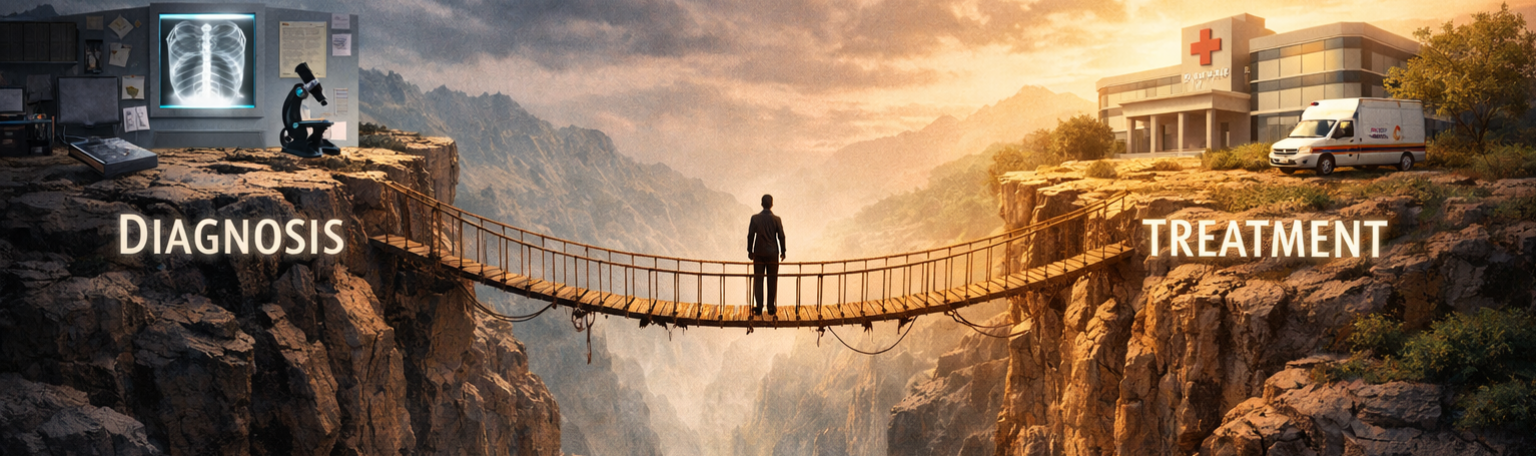
A patient presents to their primary care physician in a rural county in eastern Tennessee, southwestern Virginia, or West Virginia. After workup, they're diagnosed with metastatic castration-resistant prostate cancer. Their oncologist knows about 177Lu-PSMA-617. They've read the VISION trial data. They understand this therapy exists and that their patient is likely a candidate.
And then comes the honest conversation:
"I'm going to refer you to a center that can do this. It's about three hours away. You'll need to go multiple times."
For many patients in Appalachia, that sentence ends the conversation. Not because they don't want treatment but because three hours might as well be thirty, when you factor in no reliable transportation, lost wages for a day of travel, a caregiver who can't take off work, or a body that simply isn't up to the trip. And that's assuming the referral gets made at all, which requires a referring provider who knows the therapy exists and feels confident enough to send the patient somewhere they may have never personally worked.
This is the access problem in Appalachia. And it's not unique to theranostics.
The Numbers Are Hard to Ignore
Appalachia consistently leads the nation in cancer mortality rates. The reasons are layered and multifactorial, higher rates of smoking, obesity, and occupational exposure, combined with lower rates of screening and earlier-stage diagnosis. But a significant and underappreciated contributor is delayed or absent access to advanced therapies, including radiopharmaceutical treatments that are now standard of care at major academic centers.
The map tells the story clearly. Drive from Knoxville to Roanoke and look at what you pass through. Beautiful, rural communities with real hospitals and real providers who are doing their best with the resources they have. But the density of nuclear medicine infrastructure, theranostic-capable programs, and clinical trial access thins out quickly the farther you get from the anchor cities.
Clinical Trials: The Access Gap Nobody Talks About Enough
This is the piece that doesn't get enough attention, even in conversations about rural healthcare disparities.
Clinical trials are where the next generation of theranostic therapies is being tested right now. Actinium-225 platforms, novel disease targeting molecules, new targets in breast, lung, and GI cancers. The science is moving fast. But the trial sites are concentrated. Enrollment criteria often require proximity to the treating institution for frequent monitoring visits. Community providers, even when they know a trial exists and have a patient who might qualify, frequently don't have a clear pathway to connect that patient to enrollment.
The result is a compounding disparity. Patients in rural Appalachia don't just miss out on currently approved therapies. They're largely excluded from the trials that will shape what's available five years from now. That's a harm that's hard to quantify but very real.
Why Workforce Is the Pivot Point
I want to be careful not to oversimplify this, because the access problem in Appalachia is genuinely multifactorial. Transportation, insurance coverage, broadband access for telehealth, social determinants of health, all of that is in the mix. But workforce and training is the piece ARC is positioned to actually move.
Here's the logic: if the community providers along the Appalachian corridor have the training, confidence, and workflow templates to deliver theranostics locally, the travel burden shrinks. The referral pathway shortens. The patient who might have declined a distant referral gets treated close to home. And a site that's delivering theranostics is also a site that can potentially support clinical trial satellite participation, meaning trial access expands too.
This is why education isn't just a nice-to-have. It's the functional prerequisite for everything else.
What We're Trying to Do About It
ARC's entire model and intent is built on this premise. The workshops, the online resource hub being developed, shared documents with critical startup templates, etc. Those resources are being designed because a community team that feels prepared is a community team that can confidently provide advanced care.
We're not under the illusion that training and information alone solves everything. But we're convinced it's the right place to start, and we're committed to making it as practical and accessible as we possibly can.
Your turn.
This community exists because the problem is real, and because the people experiencing it on the ground every day have knowledge and perspective that no grant proposal can fully capture.
If you are in the healthcare field, what issues do you experience that negatively impact patient access to care? We would love to hear from you.
Whether it's referral confusion, transportation logistics, staffing limitations, insurance barriers, or something specific to delivering or accessing theranostics in your community, your experience matters to what we build next.
Drop us a line or leave a comment below. This conversation is exactly what ARC is for.